


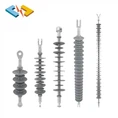

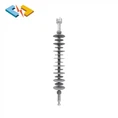
Composite Insulators for Railway
Composite insulators for railways are advanced components used in electrified railway systems to provide electrical insulation and mechanical support for overhead catenary wires. They are designed to address the unique challenges of railway environments, offering several advantages over traditional materials like ceramic or glass.

What use polymer insulator for the Railway?
1. Small size and light weight, about 1/5~1/9 of the porcelain insulator of the same voltage level, easy to transport and install.
2. High mechanical strength, reliable structure, stable performance, large safe operation margin, providing guarantee for line and safe operation.
3. Excellent electrical performance, silicone rubber umbrella has good hydrophobicity and migration, good pollution resistance, strong anti-pollution flash ability, can operate safely in heavily polluted areas, and does not require manual cleaning, and can be exempted from zero value maintenance.
4. It has acid and alkali resistance, heat aging resistance and electrical resistance, good sealing performance, and can ensure that its internal insulation is not damp.
5. Good anti-brittle performance, strong shock resistance, and no brittle fracture accidents will occur.


Composite Railway Insulator
A suspension-type single composite insulator is a type of electrical insulator used in power transmission and distribution systems. It is designed to suspend high-voltage conductors and provide insulation between them and the supporting structure. Made from composite materials like polymer, it combines a lightweight core with an external weather-resistant sheath, offering advantages such as high mechanical strength, durability, and excellent resistance to environmental factors.

advantages of Composite Insulators for Railway
High Mechanical Strength
Composite insulators have high mechanical strength, allowing them to withstand significant tensile and compressive forces, making them suitable for the various mechanical stresses encountered in railway operations.
Lightweight
Compared to traditional ceramic or glass insulators, composite insulators are lighter, making them easier to transport and install, and reducing the load on installation equipment.
Excellent Anti-Pollution Flashover Performance
Composite insulators have excellent resistance to pollution flashover, making them ideal for use in heavily polluted environments and reducing the risk of line failures due to flashovers.
different types of Composite Insulators for Railway
Here are 3 types of composite insulators: the procelain insulator; the glass insulator; the composite insulator.
The electrified railway composite insulator is a type of insulator product that is suitable for use in electrified railway tunnels with complex operating conditions. It can effectively prevent flashover accidents and reduce the amount of cleaning and maintenance work required. Due to its small size, it is particularly suitable for use in tunnels with limited clearance, as it cannot be replaced by ceramic or glass insulators.

Silicone Rubber Insulator For The Railway
DIMENSIONS:
Total Length:960±30mm.
Min. Dry Arcing Distance:800mm.
Min. Creepage Distance:2370mm.
Diameter Of The Rod:070mm.
Number Of Sheds: 17.
RAW MATERIALS:
1. End-fitting:
1.1 Material: Cast Iron Or Cast Steel,Hot Dip Galvanized.
1.2 Average thickness of the galvanization>120 μm.
2.Core:
2.1 Material: Epoxy & Glass Fiber.
3.Weather sheds:
3.1 Material:HTV Silicone.
3.2 Color: Gray.
Electric Silicone Rubber Polymeric Insulator For Railway
DIMENSIONS:
Height: 370±0.6mm.
Creepage Distance:380mm.
Diameter Of The Rod:035mm.
Number Of Sheds: 23.
RAW MATERIALS:
1.Core:
1.1 Material: Epoxy & Glass Fiber,Acid-Resistant type.
1.2 Diamter:035mm.
2.Weather sheds:
2.1 Material: HTV Silicone.
2.2 Color: Gray.


145kV Electrical Polymer Guy Strain Insulator For Overhead Line
DIMENSIONS:
Height: 1650±15mm.
Dry Arcing Distance:1388mm.
Diameter Of The Rod:024mm.
RAW MATERIALS:
1.End-fitting:
1.1 Material:Cast Steel Or Forged Steel, Hot Dip Galvanized.
2.Core:
2.1 Material: Epoxy & Glass Fiber.
2.2 Diamter:024 mm.
3.Weather sheds:
3.1 Material: HTV Silicone.
3.2 Color: Gray.
Why choose us

Wuhan Line Power Transmission Equipment Co., Ltd. stands at the forefront of innovation in the realm of high voltage transmission power composite insulator series products. Our cutting-edge technologies have been cultivated through fruitful collaborations with renowned scientific and research institutions, including Wuhan University (previously known as Wuhan University of Water and Electricity), Hubei Institute of Chemical and Industry, and Wuhan High Pressure Research Institution. These partnerships have been instrumental in propelling our advancements in research, development, and the subsequent production and sales of our high-quality insulator series.
The company products are covering composite station post insulators with electricity voltage from 72.5kV to 252kV, strength grade from 10kN to 20kN; the overhead line composite insulators with AC electricity class from 10kV to 1000kV and DC from 400kV to 1100 kV which strength grade from 70kN to 1000kN; and electrified railway composite insulators which includes long rod suspension 100 (120)kN and 160kN in ordinary type, reinforced type, highland type and double insulation type, and long rod post 8kN,12kN,16kN in ordinary type, reinforced type, highland type and double insulation type. All specifications and models have past the domestic or international test, whose comprehensive technical performance is in the leading place of the world.

Production Equipment
We have six workshops and the total area is 30,000 square meters. Our company owns the most advanced 18000cc full automatic overall injection molding machines and the voice-operated displacement crimping machines. Our company built up a high voltage testing hall with 1000 kV power frequency experimental transformer, 600kV steep shock wave test machine,1800kV impulse voltage generator set, 40kN.m bending torsion testing machine, 2000kN tensile testing machine etc.., and physical & chemical laboratory, electrical laboratory with complete set of equipment, and the testing area is up to 2,000 ㎡. We have the ability of inspecting the raw material and insulators, and performing routine test, sample test and most of the type test.


The Package

All goods are packed in weatherproof containers to protect them during land, air and sea transportation. Several different grades of packaging can be offered depending on the mode of transport and the expected storage conditions. Special packaging can be made. Normally we use plywood case, solid wood case or the cartons for the packing.


our services
24 Hours Quick reply
We value your inquiry very much and will make quick response. Any kind of technical support are available for users.
Customized Product
Welcome to provide your drawings or technical data for customization and free marking service can be provided. Our products are certified by IEC / ANSI / GB / ISO9001 and 24 months warranty after goods arrival can be provided.
Sample/OEM
Samples or OEM will be provided if necessary.
Bid Tender
we have 11 years' experience on international and national Tender Bidding.
Strict Quality Control of Production
Adopt advanced testing equipment, such as: 1000kV power frequency testing transformer, 1800kV impulse voltage generator set, 2000kN automatic tensile test machine which ensures the excellent quality of our goods.
Insulator Parts
All Parts Available in lifetime use.
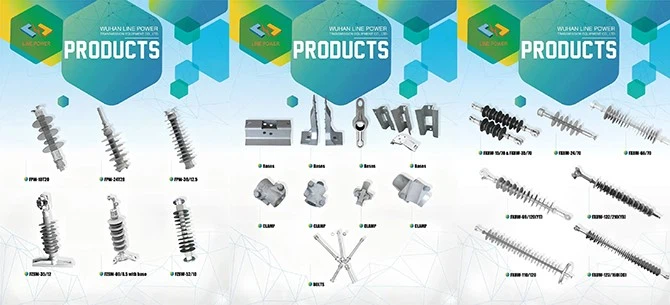
related products

FAQ
Q: What is a guy insulator?
A: A guy strain insulator is specifically engineered for use with guy wires on overhead pole lines. Constructed from fiberglass material, it effectively shields the guy strands from any electrical current that may be present in the transmission line.
Q: Where is the strain insulator for the guy wire assembly installed?
A: The strain insulators are utilized in overhead electrical lines. These insulators are positioned between stay wires to electrically isolate the lower section from the current. Additionally, they may be employed where a wire connects to a pole or tower, effectively transmitting the tension of the wire to the support while providing electrical insulation.
Q: Why do we need to insulate rails electrically?
A: Consequently, the rails need to be insulated to prevent stray current interference. Rail lines usually use insulators and insulated railway joints. The ductile iron shoulders are protected from wear caused by direct contact with the rails and, thanks to the insulator, the electricity is insulated.
Find professional composite insulators for railway manufacturers and suppliers in China here. With more than 10 years' experience, we warmly welcome you to wholesale high quality composite insulators for railway for sale here from our factory. Good service and competitive price are available.
Composite Station Post Insulator, Polymer Tension insulator for electrified railway, Composite Post Insulators For Railway