


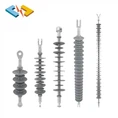

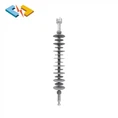
Composite Line Post Insulator
This type of line post insulator serves the same function as the suspension composite insulator, but its structural design is quite distinct, offering a variety of configurations to suit different applications. In fact, traditional Cross-arm composite insulators and Composite Pin Insulators used in China are technically part of this category as well. Unlike suspension composite insulators, which are primarily designed to withstand tensile loads, composite post insulators are engineered to endure significant bending loads during operation. In some installation methods, post composite insulator may also be subjected to tensile loads in addition to bending forces.

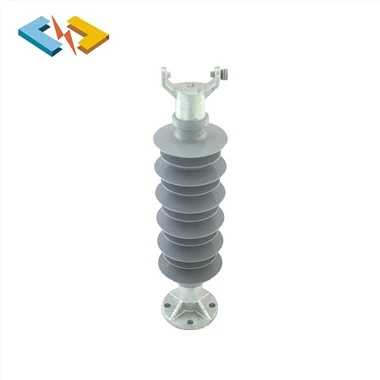
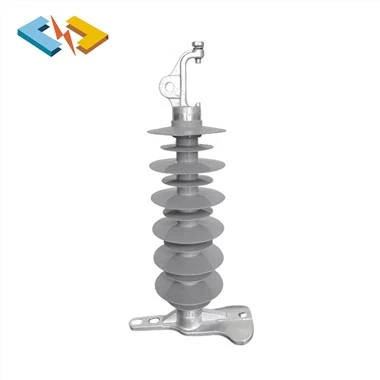
The composite post insulator is composed of an epoxy resin lead-out core rod, an umbrella skirt sheath, and hardware fittings at both ends.Due to the need to resist bending loads, the core rod of the post composite insulator is typically thicker than that of a suspension composite insulator. While the umbrella skirt structure remains similar to that of a suspension composite insulator, the hardware fittings at both ends are specifically designed to accommodate the unique mechanical stresses encountered in post insulator applications.
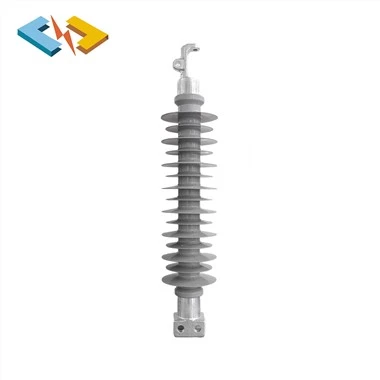


Materials List
Silicone Rubber
Excellent electrical insulation performance
Since the main bond of silicone rubber is Si-0, the silicon in it is a very good electrical insulation material. Unlike general rubber, which has C-C as the main bond, it is conductive. Even if it is ablated by arc to become SiO2, it still has electrical insulation properties. It is also a flame retardant and non-combustible material. Therefore, it has good corona and arc resistance. At the same time, because its dielectric strength and electrical insulation change very little under the change of temperature and frequency, its dielectric strength can basically remain stable in a wide temperature range, and its dielectric constant and dielectric loss tangent value hardly change in a large frequency range. In short, its electrical insulation performance is very stable.
Good physical and mechanical properties: Although the mechanical properties of vulcanized silicone rubber are not as good as those of natural rubber and other synthetic rubbers, they can be greatly improved and enhanced after reinforcement and modification.
Customized Color Available


Fiber glass Core
Epoxy glass fiber drawing rod, referred to as core rod. It is mainly used in composite insulator products to bear mechanical strength and internal insulator. At present, the core rods used in composite insulators are all electrical core rods, which are mainly of two types: ordinary core rods and acid-resistant core rods. The raw materials of glass fiber used in acid-resistant core rods do not contain boron and have low alkali metal ion content. These two core rods also have high temperature resistant and non-high temperature resistant types. High temperature resistant core rods are suitable for use in high temperature injection products because their bending stress resistance at high temperature is 300MPa~350MPa (too high stress will increase the brittleness of the core rod, which is not conducive to crimping). Non-high temperature resistant core rods are mainly used in extruded string umbrella products, and their prices are relatively low.
Size : Customized Size Available


End Fitting
The metal fittings on composite post insulators (also known as composite line post insulators) are crucial components that ensure the insulator's secure attachment to structures and the proper connection to conductors. These metal fittings are typically located at the top and bottom ends of the electric insulator and are designed to meet the mechanical and electrical demands of the system.
Top Fitting: Typically includes a clamp or bracket to secure the electrical conductor.
Bottom Fitting: Designed to attach the line insulator securely to the substation structure, pole, or cross-arm.
Size: Customized Size Available


Product technical parameters

Advantages of Composite Post Insulators

High Mechanical Strength:
In the manufacturing process of composite insulators, in order to ensure that the long-term mechanical properties of composite post insulators can meet the requirements of operational reliability, crimping should be adopted. All interfaces exposed to the air must adopt high-temperature vulcanization process and metal accessories must adopt heat treatment.

Light Weight:
Because the fiberglass rod has much higher mechanical strength than porcelain, and the density of the rubber material is much lower than porcelain, the weight of the composite insulator is much lighter than that of porcelain. This weight difference increases with the increase of voltage level. Therefore, silicone rubber insulators tend not to require cranes or other lifting equipment for loading and unloading. The lighter weight also allows the use of lightweight and less expensive structures and installation equipment. The smaller size and weight also make its shipping cost lower than that of the equivalent porcelain insulator.

Save Cost:
Excellent pollution resistance greatly improves the reliability of power transmission and reduces the cleaning and maintenance costs of insulators.
In summary, composite Line Post Insulators offer a range of advantages including lightweight, high mechanical strength, superior electrical performance, and resistance to environmental factors. These benefits make them an ideal choice for modern power systems, ensuring reliable and efficient operation over extended periods.
Composite Post Insulator Categories


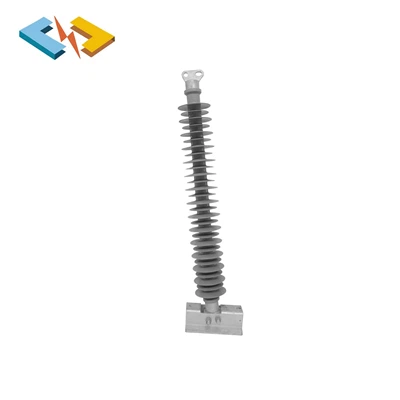
The Application of Composite Post Insulator
The Post Composite Insulator is mainly used in power stations to support and insulate high-voltage busbars and reactors, or as an insulating support component in disconnector equipment.
This type of polymer insulator is mainly subjected to bending loads during use. If it is used as an original component of a disconnector, it must also withstand torsion loads. The main difference between power station support insulators and line support composite insulators is the different places of use. Line post composite insulators are used on high-voltage lines, while power station support composite insulators are used in substations or converter stations. They can also be used to support and insulate busbars in switch cabinets and electric locomotive pantographs.

Substations
Composite post insulators are widely used in electrical substations to provide insulation and mechanical support for busbars, switches, and other high-voltage equipment. electric power line insulators ensure safe and reliable operation by preventing electrical currents from passing to the supporting structures.Composite insulator are suitable for use in both AC and DC substations.

Urban Power Distribution
In densely populated urban areas, electrical power line insulators are crucial for compact and efficient power distribution. Their lightweight and slim design allow for reduced equipment size and closer spacing of electrical components, which is essential in space-constrained environments. Composite Insulator for power lines also help to lower the height of power towers and poles, reducing the visual impact and improving safety.
Retrofitting and Upgrading
Composite post insulators offer a more reliable and low-maintenance alternative, with better performance in polluted environments and a longer service life. Additionally, their installation dimensions are typically compatible with those of traditional insulators, making retrofitting straightforward.
Packing & Shipping
All composite insulators are packed in weatherproof containers in order to protect the products during land, air, and sea transportation. Several different grades of packaging can be offered depending on the mode of transport and the expected storage conditions. The packaging options that we offer are
- Standard grade/prefabricated packing
- Economical grade/cardboard carton
- Best grade/closed wooden crate
Since the user best knows their crate requirements, they should select the option that is most suited to their needs and include that information in the purchasing specification. Special packaging arrangements can be accommodated upon request.
Each container is marked with the number of insulators it contains, the catalog number, the manufacturer's name, and any other customer requests.
Each packing (wooden Cases or Paper ubes) attached specification and certification of products.


Projects from around the world
United Sates, Canada, Mexico, Honduras, Trinidad and Tobago, Paraguay, Dominican Republic, Brazil, Costa Rica, Argentina, Venezuela, Chile, Peru, Ecuador, Malawi, Ghana,Togo, Egypt, Ethiopia, Mozambique, Samoa Sweden, Norway, France, Belgium, Czech Republic, Poland, Bulgaria, Romania, Jordan, Oman, Pakistan, Uzbekistan, Afghanistan, Kyrghyzstan, VietNam, Cambodia, Philippines, Sri Lanka, Indonesia,Thailand, Papua New Guinea, Australia, New Zealand...5 continents 45+ counties.


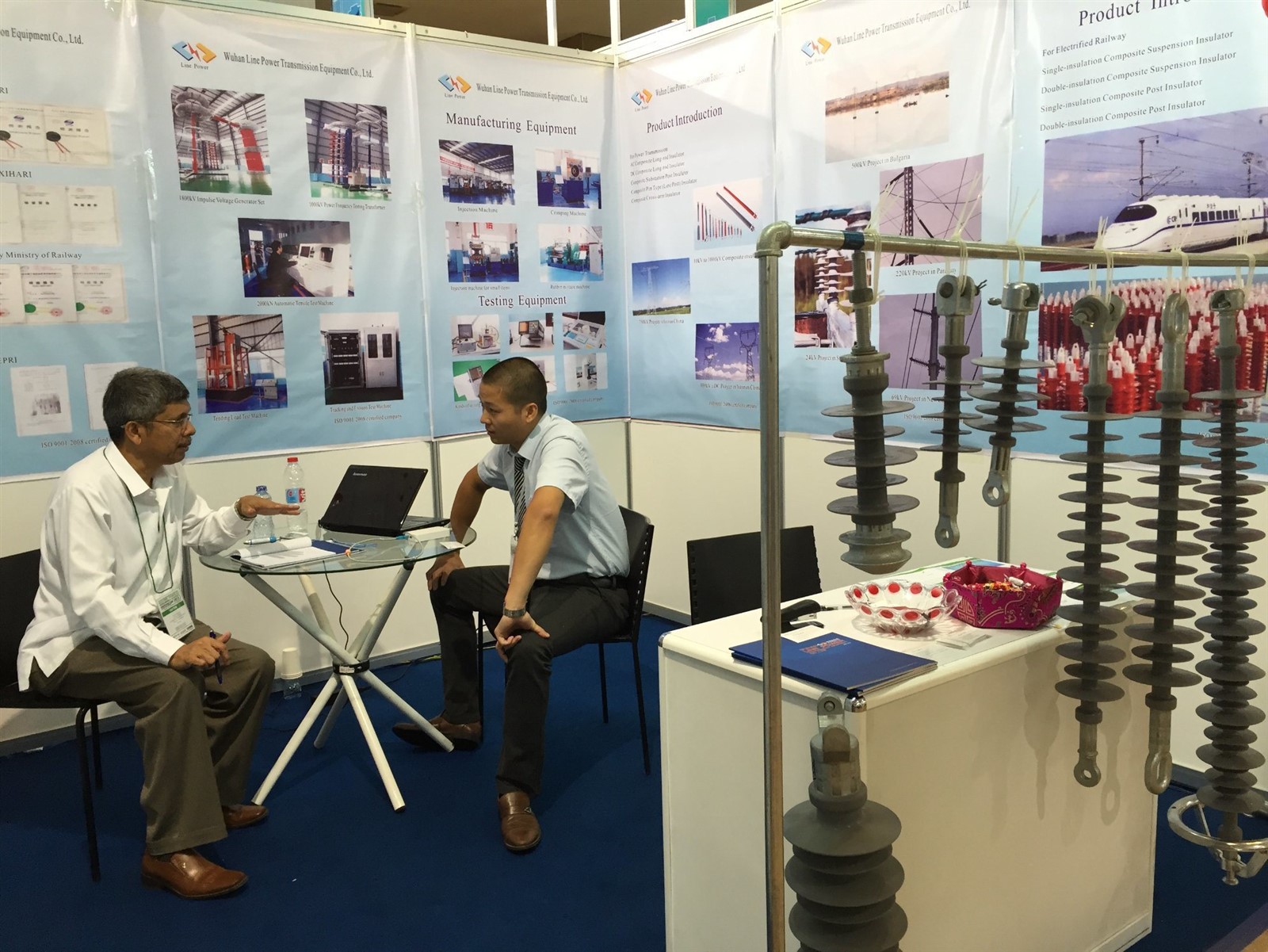
Exhibition
We have been participating in various exhibitions at home and abroad from 2010 to 2020. At the exhibition, relevant people from the industry and us saw our products directly and closely.




FAQ
1. Q: Are you the factory or trading company?
2. Q: What're your main products?
3. Q: Can I get some samples?
4. Q: What's your payment terms?
5. Q: How can you control your quality?
6. Q: Does your company accept customization?
7. Q: What's your warranty terms?
8. Q: Do you have the products in stock?
9. Q: What do you have for the certificate?
10. Q: How to become the agents for Line?
We will depend on the sales turn over and also do research on your market. If you have interest, let us discuss more!
11.Q: Can we visit your company?
Find professional composite line post insulator manufacturers and suppliers in China here. With more than 10 years' experience, we warmly welcome you to wholesale high quality composite line post insulator for sale here from our factory. Good service and competitive price are available.
15kV Composite Post Insulators, post top insulators, Composite Vertical line post insulator