


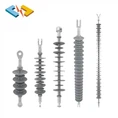

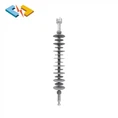


How can substation pillar insulators be configured?
To select the best pillar insulators for various substations, such as AIS insulation switches, you need to consider various technical parameters. Specifically, the important factors to be considered in optimizing the dimensions and dimensions of insulators are mechanical, electrical, environmental, functional, and economical. Depending on the usage, various types of support insulators can be used in substation and substation, such as bus bar support, smooth reactor support, and switch.
The AIS insulator, the basic requirements can be divided into three main categories: functions and electrical insulators require that their main functions be secure: cutting between States, cutting between them, visible, reliable, and terminating in state. It is not safe to withstand normal flow and current failure without interruption or abnormality. In fact, the insulation switch must prevent discharge through the open gap and ground.
The mechanical requirements from the mechanical point of view must be that the insulation switch must withstand the external load in addition to its own load. For example, in high-voltage equipment, one of the toughest conditions is earthquake disaster, so high accuracy design is required to meet all the seismic requirements. Other loads to consider include short circuit, fast wind, and terminal load. The environmental requirement isolator switch is completely exposed to the environment, and it is necessary to withstand environmental factors such as severe freezing and heavy rain and increase the risk of discharge. In addition, contamination is an important element of sizing because insulation failure can cause discharge to the ground.
Since all of these requirements are closely related to the performance of the insulator, the rear insulator is one of the most important factors in isolating switches and many other substations applications. Considering other requirements associated with displacement under load under use, an insulating switch has another serious problem that other types of equipment do not actually face. It is the motion of the machine parts needed to turn the device on / off. Therefore, it is necessary to have some degree of rigidity to function correctly.
In addition to the above limitations, we had to provide a compact and cost-effective solution to most of today's open substations. The development of station isolators is greatly useful to achieve this goal by limiting the arc distance required for the bus, and separating the switches and other station equipment. This can be achieved by optimizing back insulator design. For example, optimum material selection, mechanical strength and stiffness, reduction of stack / intermediate flange, optimization of mesh profile and scaling coefficient.
In the case of UHV, the main problem of the rear insulator is related to the height, especially in the polluted environment. The mechanical requirements associated with bending and torsional loads only complicate problems, making it much harder to build such devices. Column insulators basically have five different design options. RTV coated porcelain in factory. The hybrid car is made up of the core of the porcelain and the silicon rubber shelter attached to the top. Class of solid composite materials Hollow composite inflatable hollow type. Each alternative type of insulator has relative advantages and disadvantages.


Overview of lightning discharge
Thunder flash is a discharge phenomenon caused by the accumulation of a large amount of electric charge in thunderclouds in the atmosphere. It can be divided into three types: intra-cloud flash, inter-cloud flash and cloud-to-ground flash. The main thing that can cause harm to ground equipment is cloud-to-ground lightning.
According to the direction of lightning development, it can be divided into two types: downward lightning and upward lightning. Downward thunder is generated in thunderclouds and develops toward the earth; upward thunder is excited from the top of grounded objects and develops toward the thundercloud. The polarity of lightning is determined by the sign of the charge flowing from the thundercloud to the earth. Extensive actual measurements show that no matter what the geological conditions are, about 90% of lightning is negative polarity lightning.
Downgoing negative polarity lightning can usually be divided into three main stages, namely pilot, main discharge and afterglow. The pilot process lasts for about a few milliseconds, and the air gap between the thundercloud and the ground is broken down by the pilot channel that develops step by step, high conductivity, high temperature, and has extremely high potential. There are charges distributed along the pilot channel, the number of which reaches several coulombs. When the downlink leader is short-circuited to the ground, the transition process of the pilot channel discharge occurs. This process is very similar to the process in which the long charging line is short-circuited to the ground at the front end, which is called the main discharge process. During the main discharge process, the channel produces a sudden bright light and a huge thunderous sound, and an impulse current with a large amplitude (up to several hundred kiloamps) and a duration of nearly a hundred microseconds flows along the lightning channel. . It is this main discharge process that causes the most destructive effect of lightning discharges. After the main discharge is completed, the remaining charges in the cloud continue to flow to the earth along the lightning channel. At this time, what is seen on the unfolded photo is a fuzzy glowing part, which is called afterglow discharge. The corresponding current gradually decays, about 10^3~10^1A, the duration is about a few milliseconds.
The above three stages constitute the first component of the downlink negative lightning (hereinafter referred to as the component). Usually, the lightning discharge does not end there, but there are several (or even a dozen) subsequent components. Each subsequent component also consists of a lead phase to recharge the Thunderbolt channel, a main discharge phase to discharge the channel, and an afterglow discharge phase. The maximum current in each component and the maximum steepness of current growth are the main factors causing overvoltage, electrodynamic force, electromagnetic pulse and blasting force on the struck object. The current flowing for a long time in the afterglow stage is an important factor causing the thermal effect of lightning.
As for how thunderclouds obtain electric charges, how they gather together charges of the same sign and separate them from charges of different signs, how these charges are distributed in the cloud, how the charges in the cloud move before and after the lightning discharge and during the entire discharge process, etc. , the current research is not enough, some hypotheses and theories still lack reliable confirmation. Here we can only briefly mention some of the more certain understandings.
At present, it is generally believed that thundercloud charges are limited to a large number of dispersed water properties (such as water droplets, ice particles, snow flakes, etc.), rather than independent free-moving ions and electrons. The most intense charging process of water property points is related to their transformation into different states of existence, as well as their absorption of ions, collision with each other, being broken apart or fused, etc. The separation of water properties with different charges may be caused by their different aerodynamic characteristics under the action of strong airflow and the earth's gravitational field. As a result, charges with different signs are accumulated in different parts of the thundercloud. An electric field is generated between these parts, and the polarization of the water properties in this electric field may promote the charging process of thunderclouds. The comprehensive effect is to cause a relatively strong ability to generate and separate charges, making the main charge of thunderclouds The lateral extent of the electric part extends to several kilometers and vertically separates the thundercloud charge into two large charge centers.
Negatively charged clouds are distributed at a height of about 1.5~5 km (the center height is about 2 km~3 km), while positively charged clouds are distributed at a height of about 4~10 km. There may also be local accumulation of positive charges in the small area at the lowest part of the cloud, as shown in Figure 2-7. In rare cases, it is also measured that the upper part of the thundercloud has a negative charge and the lower part has a positive charge. The amount of charge in the main parts of thunderclouds of different polarities is close to the same; the amount of charge in different thunderclouds may vary greatly, and generally the amount of charge in thunderclouds reaches several hundred coulombs. Only part of the total charge flows to the earth through lightning. At the same time, there are also inter-cloud and intra-cloud discharges.
The average field strength between thunderclouds and the earth usually exceeds 102V/cm, this is sufficient for the already formed downward thunder leader to continue moving forward. The average field strength in the main charged area of thunderclouds is about 103V/cm. In fact, the charge of thunderclouds is not evenly distributed. The aircraft used the probe method to measure the thunderclouds: there are often small areas (about 50 m~200 m) with high charge density in thunderclouds. The field strength near the area is much stronger than the average field mentioned above. It is this inhomogeneity and the existence of local strong fields, or the existence of local strong fields between the negative charge center in the lower part of the thundercloud and the positive charge clusters below it, that create conditions for the initial formation and development of the downward leader.
To develop a descending leader, it is necessary to supply it with a larger current, and these charges are originally dispersed on a large number of water points that are separated and insulated from each other. The natural conductance of thunderclouds is far from sufficient to supply the charges required by the leader. Therefore, at the same time as the formation and development of the downward leader, there must be a strong enough gas ionization discharge process penetrating a considerable area in the cloud, which will have the form of many branch-shaped reverse leaders that develop deep into the thundercloud. The flow areas of these branch leaders will penetrate a considerable part of the thundercloud, and in this wide area, they will unload charges from a large number of water properties and collect them to supply the leader channel. Indirect proof of the existence of this process is the observation of scattered light from clouds during the development time of the downward leader. In general, the downward leader and the discharge in the cloud form a unified system that is interrelated with each other. It is likely that the speed of unloading and collecting charges from the cloud determines the average speed of the development of the downward leader.
In-cloud processes similar to the above should also exist in the afterglow phase of lightning. At this time, a large amount of charge must also be removed from the water properties of the thundercloud to form residual photocurrent.
Positive polarity lightning has less chance of appearing, so there is less research on it. The most common downward negative polarity lightning discharge is further discussed below.
Hot Tags: 66kv composite substation post insulators for t/d, China, manufacturers, suppliers, factory, wholesale, for sale, 220kV station post insulator, 330kV station post insulator, 69kV Composite Station Post Insulator, 138kV Composite Station Post Insulator, Polymer Station Post Insulators


