



Three Quick Tips for Estimating Transmission Line Voltage
Estimating the high voltage level of a transmission line can be done by following these three key indicators: checking the wire splitting, counting the number of composite insulator sheds, and observing the tower height.

1. Wire Splitting (Bundled Conductors)
Higher voltage lines often have split conductors, where each phase is divided into multiple strands. This setup increases the "effective diameter" of the conductor by arranging several thinner wires in a circular pattern. Splitting reduces material weight, minimizes electrical resistance, and helps prevent the "corona effect." The corona effect is a type of electrical discharge that creates a buzzing sound and a faint glow around the wires, particularly noticeable in rainy weather.
For example, 750 kV lines generally use six-split conductors. 500 kV lines are typically four-split, though six-split wires are becoming more common, especially in high-demand areas. Lines at 220 kV are usually two-split, and 110 kV or lower use single conductors.
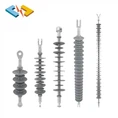
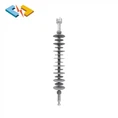
2. Number of polymer Insulator sheds
The higher the voltage, the more sheds are required. In general:

Each silicone rubber sheds can withstand around 10-15 kV, though the exact number varies depending on altitude, local pollution levels, and line importance. In high-altitude or heavily polluted areas, additional sheds may be added.
3. Tower Height
Transmission tower height is also a good indicator of voltage level. Higher voltage lines need to maintain a safe distance from the ground, structures, and trees. In urban areas, the **clearance height** from the ground for various voltage levels typically follows:
35-110 kV: Minimum clearance of ~7 meters (approx. 3-4 story building)
220 kV: ~7.5 meters (about 5 stories)
330 kV: ~8.5 meters (around 8 stories)
500 kV: ~14 meters (12-13 stories)
750 kV: ~19.5 meters (18-20 stories)

In practice, 110 kV towers generally stand about 10-15 meters tall, 220-330 kV towers are often around 20-30 meters, 500 kV towers reach 30-40 meters, 750 kV towers may be 50+ meters, and 1000 kV towers reach up to 70-80 meters. Tower height may vary by climate and terrain.
With these three checks, you can often gauge the voltage level of a transmission line at a glance!