


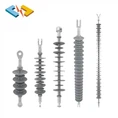

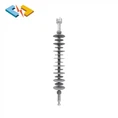

In the realm of transmission lines, a variety of insulators play a pivotal role in delivering electrical insulation and structural support to conductors. The selection of insulator types is contingent upon factors like voltage levels, environmental considerations, and system prerequisites. Here, we outline several commonly utilized insulators for transmission lines:

1. Pin Insulators: Mounted on pins or spindles, these insulators lend support to the conductor. They find widespread application in distribution lines and lower voltage transmission setups.

2. Suspension Insulators: Hanging from crossarms, suspension insulators provide superior electrical insulation and are commonly employed in higher voltage transmission lines.
3. Strain Insulators: Engineered to absorb mechanical tension in the line, strain insulators are strategically placed at points where the conductor alters direction or where precise line tension control is essential.

4. Post Insulators: Typically deployed in substations to support busbars and other equipment, post insulators, mounted on a post or structure, offer insulation for high voltage applications.
5. Cap and Pin Insulators: Combining features of both pin and suspension insulators, these are designed to provide enhanced mechanical strength and are favored in medium to high voltage transmission lines.
6. Composite Insulators: Crafted from a blend of materials like fiberglass and silicone rubber, composite insulators offer advantages such as reduced weight, heightened pollution resistance, and increased mechanical strength. Their usage spans various voltage levels.
7. Insulator Strings: Comprising multiple insulators connected in series, insulator strings are deployed to meet the requisite electrical withstand capability for high voltage transmission lines.
8. Line Post Insulators: Similar to post insulators, line post insulators are tailored for use on transmission or distribution lines. Mounted on a post, they furnish essential electrical insulation.

The meticulous selection of insulator types is imperative to ensure the dependable and secure operation of transmission lines. Considerations include line voltage, environmental conditions, and mechanical loads. Stay tuned for advancements in electric insulator technology, including silicone rubber insulators, promising enhanced efficiency and reliability for transmission systems.