


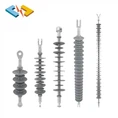

Ceramic insulator is an insulator made of electrical ceramics. Electrical ceramics are made by baking quartz, feldspar and clay as raw materials. The appearance of porcelain parts of porcelain insulators is usually covered with enamel, in order to improve its mechanical strength, waterproof and infiltration, and increase the appearance of lubricity. Glass insulators are made of tempered glass. Let me introduce you to the comparison of their advantages and disadvantages.
Mechanical strength: After comparing the mechanical and electrical properties of porcelain insulators and glass insulators with different operating years on the line, it was found that after the local porcelain insulators have been in operation for 15-20 years, the experimental value has been lower than the factory experimental value, and the rate of unqualified with the operation The number of years has increased. The stability and dispersion of glass is better than porcelain.
The results of the experiment of stopping the high-frequency vibration fatigue of the porcelain and glass insulators indicate that the mechanical and electrical strength of the glass insulators drops significantly after high-frequency vibration. The reason: on the one hand, due to factors such as the material and manufacturing process of domestic porcelain insulators, the quality of dispersion is large. Anti-aging performance: Porcelain insulators have nearly 100 years of operation experience, and their anti-aging ability is strong.
Within a period of time after commissioning. After testing the wrist, a few degraded insulators can be replaced. But as the operating time increases, its aging will become more and more serious. If the glass is tempered, the surface constitutes compressive stress. If there are emblem cracks on the surface of the glass, the micro-cracks will be tightened instead of expanding due to solid stress. The electrical strength of glass is generally unchanged during the entire operation, and its aging process is much slower than that of porcelain.