


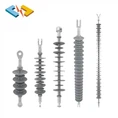

When the human body, the object is close to them, these high voltages are likely to break through the air between them and the human body, the object, through the human body to produce discharge.This is called high voltage arc shock.
The only danger of exposed high-voltage lines is that they break and fall to the ground or onto buildings, posing a significant risk of electric shock.The power department has high requirements on the strength, erection technology and routine inspection of the wires to prevent the risk of power leakage. Only in the event of some irresistible natural disasters, such as earthquakes, fires and floods, should the power be cut off in time to prevent possible power leakage.In case a high voltage wire is found to break and fall to the ground, it is safe to keep a distance of at least 20 meters from it to prevent electric shock accidents.As for outdoor overhead lines, as long as they are set up to a certain height, there are no buildings under or near the overhead lines, no matter high or low pressure, all bare wires are adopted, which can reduce the construction cost.
High voltage and low voltage are generally bare wires. In the vicinity of low voltage overhead lines in the old urban areas, buildings are relatively dense, and wires with insulating layers are generally used.Due to the high voltage wire insulation layer insulation requirements, complex construction technology, high cost, or generally use bare wire, using to increase the height of overhead line to prevent electric shock accidents.For the sake of beauty and safety, the overhead lines are no longer visible in the new urban areas, and both high and low voltage lines are buried underground.As a matter of fact, there are also high voltage lines covered with insulation, that is, high voltage cables, which will not be used unless it is absolutely necessary. It costs 10 times more than ordinary overhead lines.For the same cross-section of wires, the carrying capacity of the cable is less than that of the overhead line, even if the cable is made of copper (aluminum for overhead lines).
Due to the continuous improvement of the system, regulations and technology of the power system, electric shock accidents have been greatly reduced, and it is unlikely for the general public to have access to voltage classes above 10kV, and electric shock accidents above 10kV are rare.Therefore, there is no need to use insulated wires for such high voltage grade circuits.