


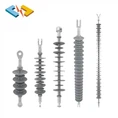

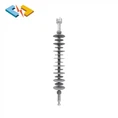
Core Components and Manufacturing Process
The production of composite insulators involves multiple precision processes,
utilizing specialized manufacturing equipment, high-precision molds, and essential
components. The primary components include:
- FRP (Fiber Reinforced Polymer) Core Rod – Provides mechanical strength.
- Silicone Rubber Housing Material – Ensures electrical insulation and weather
resistance.
- Metal End-Fittings – Facilitates secure connections to the power grid.

Production Technologies
Two main technologies are employed in the manufacturing of polymer insulators:
1. Injection Molding Process (Most Common)
- The silicone rubber housing is directly molded onto the FRP core rod in a single step.
2. Pre-Molded Sheds Process
- A thin layer of silicone material is first extruded over the FRP rod.
- Pre-molded sheds are then precisely bonded to specific locations along the rod to
achieve the required creepage distance.

Key Challenges in Manufacturing
The production of composite insulators faces several challenges, including:
- Ensuring Product Conformity to meet stringent quality standards.
- Minimizing Raw Material Waste, particularly for expensive silicone rubber.
- Optimizing Cycle Time to enhance overall production efficiency.

The Critical Role of High-Quality Molds
Molds play a pivotal role in determining the quality and productivity of composite
insulator manufacturing. A well-designed mold ensures:
- Higher Production Efficiency with fewer defects.
- Reduced Machine Downtime, improving overall factory throughput.
- Seamless Integration with Injection Molding Equipment.

To maximize productivity, manufacturers should collaborate with mold suppliers to
develop customized molds. Additionally, production managers must carefully planoperations to minimize frequent mold changes, as each change requires time for
cleaning, reassembly, and heating.