


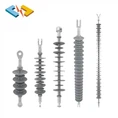

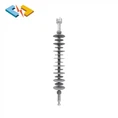
RIF vs RIP vs OIP Bushings: What's the Difference?
Transformer bushings is a important part in high-voltage power systems by providing safe insulation between conductors and grounded equipment. Choosing the right insulation technology directly affects equipment reliability, maintenance costs, and service life.
The three most common insulation technologies are RIF (Resin Impregnated Fiberglass), RIP (Resin Impregnated Paper), and OIP (Oil Impregnated Paper). Each offers unique advantages for different applications.
Here explains their differences to help partners choose the most suitable transformer bushing.
What is an RIF Bushing?
Resin Impregnated Fiberglass (RIF) bushings use fiberglass reinforced with epoxy resin as the main insulation material. Unlike traditional paper insulation, fiberglass provides higher mechanical strength and better resistance to moisture.
Main Advantages
- Completely dry insulation system
- Maintenance-free during operation
- High mechanical strength
- Excellent thermal performance
- Resistant to internal explosion
- No oil leakage risk
- Easy transportation and storage
Because RIF bushings do not contain insulation paper or oil, they offer excellent long-term reliability in demanding environments.
What is an RIP Bushing?
Resin Impregnated Paper (RIP) bushings use high-quality insulation paper impregnated with epoxy resin under vacuum.
Compared with OIP technology, RIP bushings eliminate insulating oil and reduce environmental risks.
Main Advantages
- Oil-free insulation
- Good dielectric performance
- Suitable for high-voltage applications
- Lower maintenance than OIP
However, since paper is used as the insulation medium, RIP bushings are sensitive to moisture and require proper storage before installation.
What is an OIP Bushing?
Oil Impregnated Paper (OIP) bushings are the traditional solution widely used in transformers worldwide.
The insulation consists of paper saturated with insulating oil.
Main Advantages
- Proven technology
- Competitive manufacturing cost
- Widely accepted in existing power systems
Frequently Asked Questions
What does RIF stand for?
RIF stands for Resin Impregnated Fiberglass, a dry-type insulation technology that uses fiberglass reinforced with epoxy resin.
Is RIF better than RIP?
RIF generally offers better moisture resistance, higher thermal capability, and lower maintenance than RIP. The best choice depends on the application and project requirements.
Why is OIP still used?
OIP bushings have a long history of successful operation and remain compatible with many existing transformer designs. However, they require regular maintenance and oil monitoring.
Are RIF bushings maintenance-free?
Yes. RIF bushings do not contain insulating oil or paper, eliminating many routine maintenance requirements associated with traditional bushing technologies.