


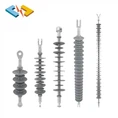

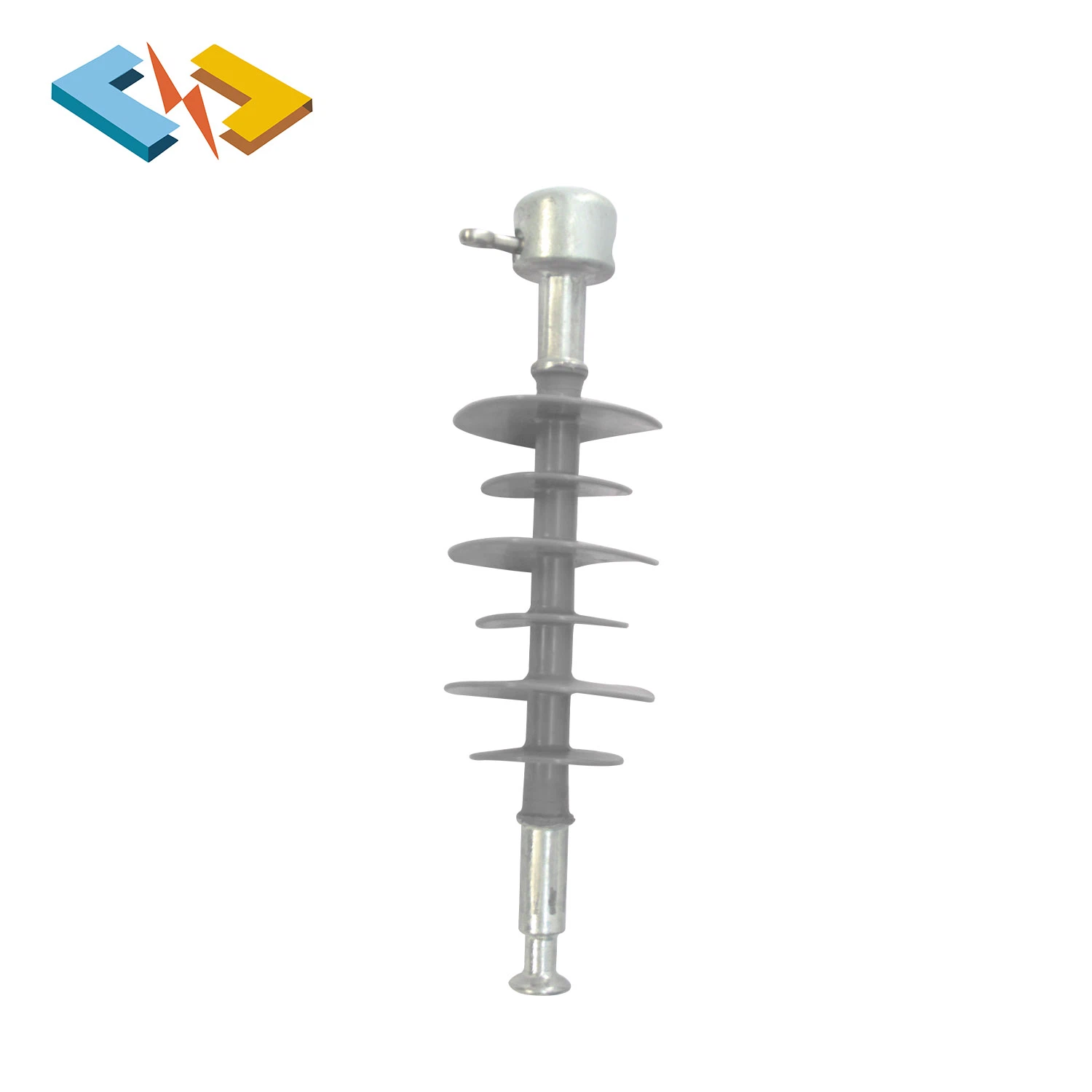
Insulator is an insulator used to support wire, which is widely used in the insulation of external live conductors of overhead transmission and distribution lines, power plants and substations and various electrical equipment. Generally, it is made of cement or mechanical card with insulating parts (such as glass, ceramic) and metal parts (such as steel feet, steel caps, flanges, etc.). The basic properties of insulators include electrical, mechanical and thermal properties. In addition, there are environmental resistance and aging resistance. When the voltage level of insulator increases, its size and weight also increase correspondingly, but the electrical and mechanical properties are not proportionally improved, and the heat resistance to sudden changes decreases.
(1) Electrical performance: The destructive discharge occurring along the insulation surface is called flashover, and flashover characteristic is the main electrical performance of insulators. For different voltage levels, insulator withstand voltage requirements are different, its indicators include power frequency dry, wet voltage resistance, lightning impact voltage resistance, lightning impact cut-off voltage resistance, operating impact voltage resistance, etc. In order to avoid breakdown in operation, the breakdown voltage of the insulator is higher than the flashover voltage. In the factory test, the porcelain insulators that can be broken down are generally subjected to spark test, that is, high pressure is added to make frequent sparks occur on the insulation surface, and maintain for a certain time to see whether they are broken down. Some insulators also need to pass corona test, radio interference test, partial discharge test and dielectric loss test. Insulators at high altitudes have decreased electrical strength due to decreased air density, so their withstand voltage should be increased accordingly when converted to standard atmospheric conditions. The flashover voltage of dirty insulators is much lower than that of dry and wet flashover voltage when they are damp. Therefore, insulation should be strengthened or pollution-resistant insulators should be adopted in dirty areas. The specific creepage distance (the ratio of creepage distance to rated voltage) should be higher than that of normal insulators. Compared with AC insulators, DC insulators have poor electric field distribution, adsorption of dirt particles and electrolytic effect, and lower flashover voltage. Therefore, special structural design and larger creepage distance are generally required.
(2) Mechanical properties: insulators are often affected by gravity and tension of wires, wind, ice weight, self-weight of insulators, wire vibration, mechanical force of equipment operation, short-circuit electric power, earthquake and other mechanical forces during operation. The relevant standards have strict requirements for mechanical properties.
(3) Thermal performance: outdoor insulators are required to be able to withstand sudden temperature changes. Porcelain insulators, for example, require several cycles of heat and cold without cracking. The temperature rise and the allowable short-time current value of the parts and insulation parts of the insulating bushing shall meet the provisions of the relevant standards because of the current passing through it.