


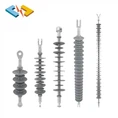


RTV Silicone Rubber Hydrophobic Coating for Insulators
Based on their chemical composition and working principle, hydrophobic coatings for insulators can be mainly classified into the following categories:
1. Silicone oils and greases: These are among the earliest applied materials. They typically have extremely low surface energy, providing excellent initial hydrophobicity. However, their physical state is mostly paste-like or oily, resulting in relatively limited durability. They may gradually wash away or migrate under wind, rain, and corona treatment, requiring regular inspection and recoating.
2. Room temperature vulcanizing silicone rubber coatings: These coatings cure in the air after application, forming a thin, elastic silicone rubber film. They combine the inherent hydrophobicity of silicone rubber with good mechanical properties, offering superior durability compared to silicone oils and greases. Even if the coating surface temporarily loses its hydrophobicity due to aging or corona treatment, the low-molecular-weight substances within can migrate to the surface, restoring the hydrophobicity to a certain extent-a unique advantage.
3. Fluorocarbon resin coatings: Fluorocarbon resins are renowned for their excellent chemical inertness, weather resistance, and stain resistance. These types of coatings produce a hard, smooth surface with a large hydrophobic angle, strong UV resistance, and a long service life. They offer good resistance to various types of contaminants, performing particularly well in areas with severe chemical pollution or coastal salt spray.
4. Composite Modified Coatings: With the development of materials science, researchers have modified the aforementioned basic materials using nanotechnology and organic-inorganic hybrids. For example, adding fillers such as nano-silica to coatings can enhance the mechanical strength, wear resistance, and arc resistance of the coating; molecular structure design can balance the coating's hydrophobicity, adhesion, and durability.
Performance of RTV Silicone Rubber Coating on Insulators
1. Anti-pollution flashover: The surface of glass insulators is smooth, but long-term exposure to air can lead to the accumulation of dust, salt spray, and industrial pollutants.
When the insulator surface is severely contaminated and damp, surface leakage current can easily cause flashover, potentially resulting in power outages.
Silicone rubber coating is a hydrophobic material that prevents water from forming a continuous conductive film on the surface, thereby reducing surface leakage current.
2. Improved weather resistance: Glass insulators exposed to ultraviolet radiation, rain, and sandstorms will gradually age.
The silicone rubber coating itself is resistant to ultraviolet radiation, high and low temperatures, and chemical corrosion, protecting the glass surface and extending the insulator's service life.
3. Self-cleaning function: The silicone rubber coating has a certain degree of hydrophobicity and elasticity, allowing rainwater to wash away attached dust and pollutants.
This "rainwater self-cleaning" capability reduces maintenance costs and the frequency of manual cleaning.
4. Improve mechanical and electrical stability
Although glass itself has high strength, microcracks may appear on its surface in harsh environments. The silicone rubber coating can act as a buffer and cover, reducing the risk of electrical breakdown caused by local electric field concentration.
Applications and Implementation
The application of hydrophobic coatings for insulators is not a simple matter of applying a single layer, but a systematic project requiring comprehensive consideration of multiple factors:
1. Applicable Objects and Timing: The coating is primarily suitable for porcelain and glass insulators in operation as a measure to enhance their anti-flashover capability. For newly constructed lines or insulator replacements, composite insulators with long-lasting hydrophobic properties can be directly selected. Coating is typically performed during dry seasons before severe pollution accumulation.
2. Surface Preparation is Key: Before coating, the insulator surface must be thoroughly cleaned to remove all dirt, grease, and residues of the old coating. This is a prerequisite for ensuring good adhesion and long-term effectiveness of the new coating. Cleaning methods include dry wiping, high-pressure water rinsing, and cleaning with specialized cleaning agents.
3. Strict Construction Process Requirements: The mixing of the coating (if necessary), the application method (brushing, spraying, etc.), the coating thickness, and curing conditions must all be strictly followed according to the material instructions and construction specifications. A coating that is too thin may affect the effect and lifespan, while a coating that is too thick may lead to problems such as partial discharge. Attention must be paid to the ambient temperature and humidity during construction.
4. Operation, Maintenance, and Monitoring: Even after coating, insulators still require regular inspection and testing. By observing the surface's hydrophobicity (e.g., water droplet morphology) and measuring leakage current, the health of the coating and the operational status of the insulators are assessed, providing a basis for subsequent maintenance decisions.
Prospects of RTV Silicone-Coated Glass Insulators
The development of hydrophobic coating technology for insulators has always kept pace with the increasing demands of power systems for safe and reliable operation. Future research and development may focus on:
Environmental protection and sustainability: Developing environmentally friendly coatings with low volatile organic compound (VOC) content, or even water-based coatings, to reduce environmental impact during construction and use.
Intelligent functions: Exploring coating materials with self-sensing capabilities, such as those that can indicate their aging level or contamination/moisture status through color changes or changes in electrical properties.
Ultra-long lifespan and maintenance-free operation: Pursuing ultra-long-lasting protective coatings that match the lifespan of the insulator itself through molecular design and composite technology, reducing maintenance frequency and costs.
Multifunctional integration: In addition to hydrophobicity and anti-fouling properties, it may also integrate multiple protective functions such as anti-icing, anti-UV degradation, and inhibition of microbial growth.
Hydrophobic coatings for insulators are an ingenious and practical invention in modern power external insulation technology. Though inconspicuous, they silently protect the crisscrossing power grid, resisting the erosion of wind, rain, and contamination, ensuring the smooth flow of current. With the continuous advancement of materials science, this technology will continue to evolve, contributing indispensable power to the safe and stable transmission of electrical energy in a more efficient, environmentally friendly, and intelligent manner.