


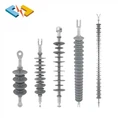

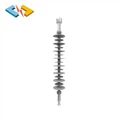
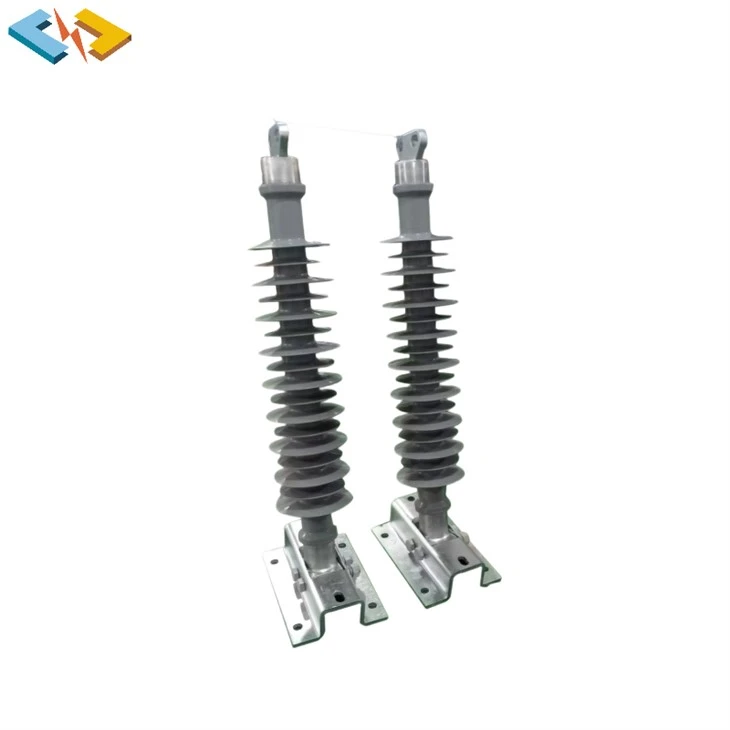
69kV Line Post Composite Insulator with Drop Tongue
Vertical Insulator
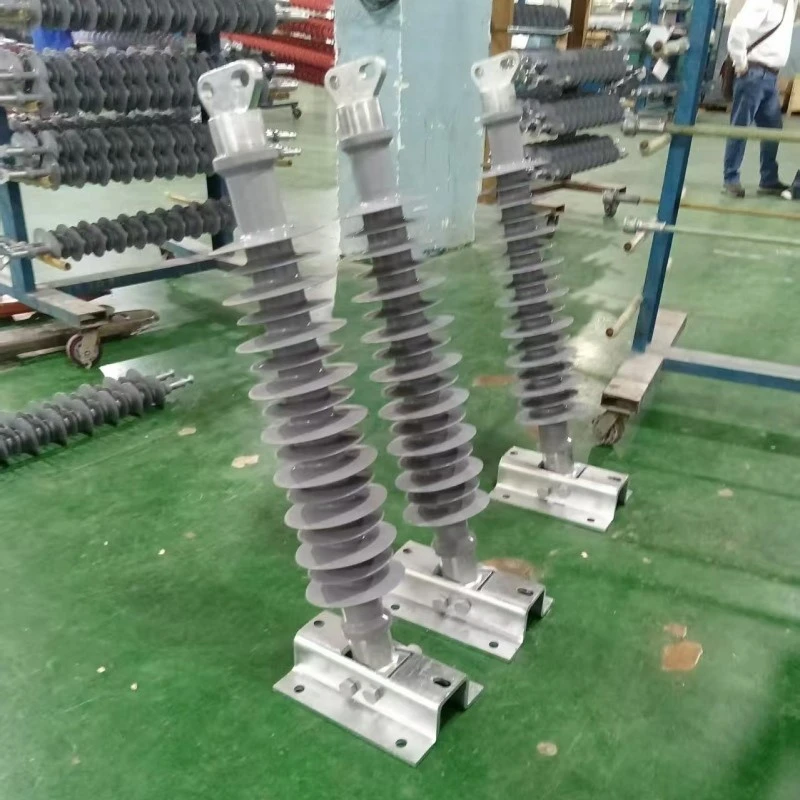
Our factory & quipments

Wet Frequency
Full English name: Wet Power Frequency Flashover; industry abbreviation: Wet Frequency Flashover; This is an AC power frequency flashover/withstand test under rain conditions in composite insulator type testing and factory verification, distinct from dry power frequency flashover and artificial pollution/fog flashover tests.
Applicable standards: IEC 61109, GB/T 16927.1, GB/T 26218, etc.
1. Simulated heavy rain/storm conditions: Simulates the operating conditions of the line under clean rain (no pollution), assessing the surface insulation capability of the silicone rubber sheath and skirt structure when directly sprayed by rainwater, and evaluating the risk of rain flashover (rainwater bridging the skirt gaps, forming a continuous water film causing flashover).
Our factory has the relevant equipment to perform these electrical tests, such as wet power frequency flashover. First, we continuously spray water for about 15 minutes until the entire insulator is wet. Then, we continuously apply KV until a flashover occurs. After 20 consecutive flashover events, we take the final average value to obtain the final flashover voltage.
SCL Testing
Unlike suspension insulators which only bear tensile force, line post/station post insulators also withstand cantilever bending loads during operation: conductor weight, wind load, icing, and short-circuit electrodynamic forces. The bending moment is greatest at the root, making it most prone to breakage or hardware detachment.
Purpose of SCL Test:
1. To verify that the insulator does not break, the core rod/FRP tube cracks, the fitting slippage, the interface peeling, or suffer permanent damage under the specified cantilever load SCL.
2. To assess three weak points: the FRP core (fiberglass epoxy core), the fitting crimp/bond interface, and the fitting itself.
3. To serve as the rated bending resistance grade on the product nameplate, used for line/substation mechanical selection and insulation support design.
4. Mandatory type test; some specifications also conduct random checks; it is used in conjunction with MDCL (Maximum Design Cantilever Load): MDCL is the upper limit of long-term operational safety, SCL is the test load, and SCL > MDCL.
In short: SCL is the bending resistance test load promised by the manufacturer and required by the standard, used to prove that the support can withstand the specified bending force without damage.
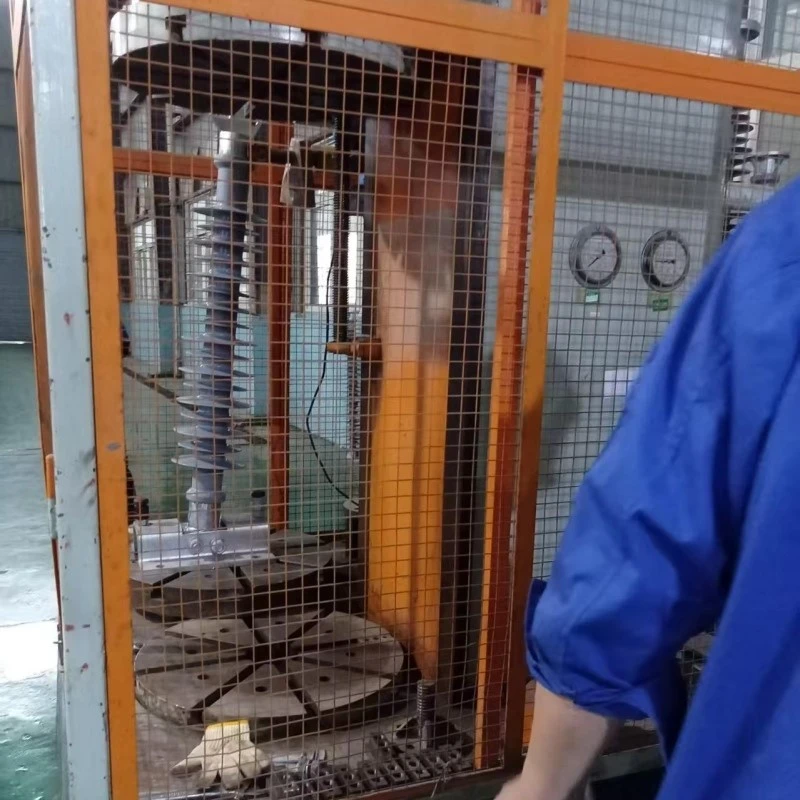
Our factory has the relevant equipment to verify this test. The insulator and base are installed on the machine, and KN is continuously applied to push the insulator until the SCL of the insulator is 70%, then stop and wait for 90 seconds to verify whether the insulator can withstand this SCL.
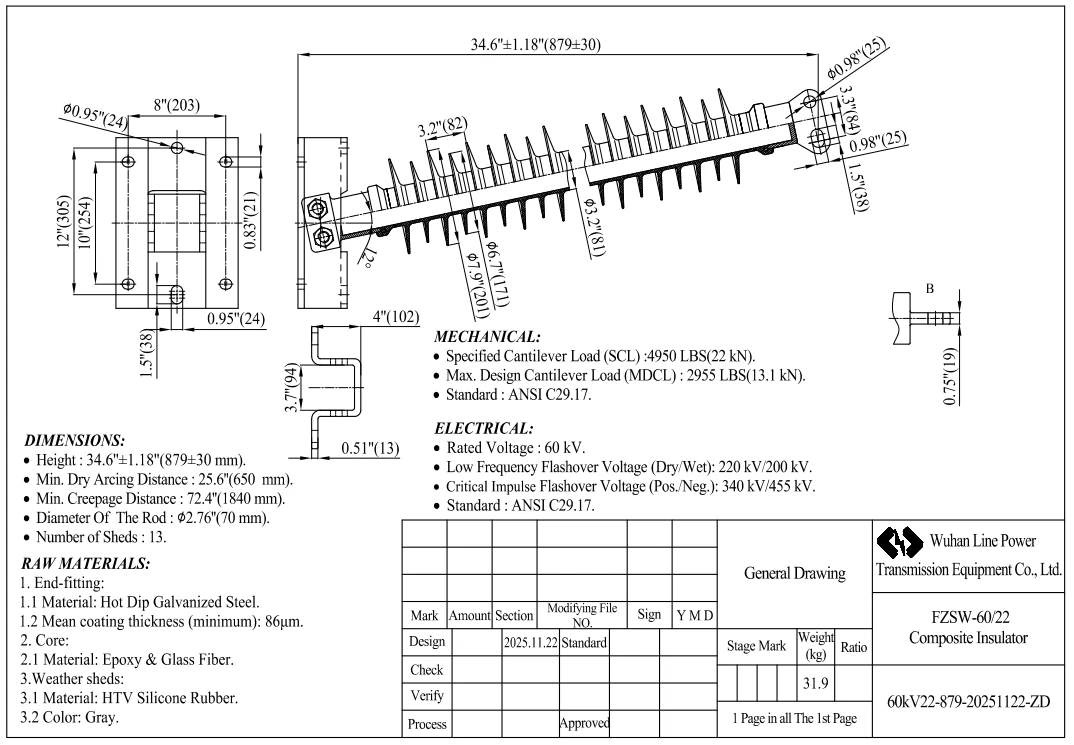
DIMENSIONS:
· Height: 879±30 mm.
· Min. Dry Arcing Distance: 650mm.
· Min. Creepage Distance: 1840 mm.
· Diameter Of The Rod: ∅70 mm.
· Number Of Sheds: 13.
RAW MATERIALS:
1. End-fitting:
1.1 Material: Hot Dip Galvanized Steel.
1.2 Mean coating thickness(minimum): 86μm.
2. Core:
2.1 Material: Epoxy & Glass Fiber.
3.Weather sheds:
3.1 Material: HTV Silicone .
Hot Tags
Vertical Post Insulator, 69kV Post Insulator, 66kV Line Insulator, Silicone Rubber 69kV Insulator , Line Post Inuslator, Post Line Insulator , Composite Line Post Insulator ,
Hot Tags: 69kv line post composite insulator with drop tongue, China, manufacturers, suppliers, factory, wholesale, for sale, 138kV Composite Station Post Insulator, 220kV station post insulator, 330kV station post insulator, 69kV Composite Station Post Insulator, Polymer Station Post Insulators


