


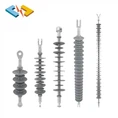

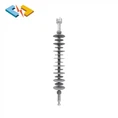

An insulator is a special insulation control, which can play the dual role of supporting conductors and preventing current grounding in overhead transmission lines. Insulators are used in the connection between the pole tower and the conductor, and the substation frame and the line. Insulators are divided into three forms: porcelain bottle type, glass type, and composite type according to dielectric materials. The common faults of insulators are analyzed, mainly to prevent the insulation failure of the insulator due to various electromechanical stresses caused by changes in the environment and electrical load conditions, thereby damaging the service and operating life of the power line.
Common faults of insulators
(1) The quality of the product is poor. Due to moisture absorption in the rainy season, the insulation performance of the insulator is low, and the insulator flashover breakdown or thermal expansion explosion occurs, resulting in explosion and eventual loss of insulation of the insulator.
(2) Improper construction damages the insulator. Due to external forces, the insulator is cracked, damaged or lack of glaze, which leads to flashover and breakdown failures in rainy weather.
(3) Insulator aging. Due to long-term electromechanical load and changes in the external environment, the insulation performance of the insulator decreases and eventually loses the insulation performance.
(4) Flashover burns. Reduce insulation performance and produce breakdown after long-term operation.
(5) Lightning strikes over voltage. Flashover and burn the insulator.
(6) Contamination flashover. The surface contamination of the insulator reaches a certain level and causes the phenomenon of insulator flashover or surface discharge.