


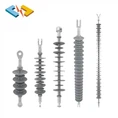

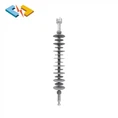
In composite insulators and electrical power line fitting, different insulator end fittings structures are used to connect insulators to towers, conductors, or other fittings. Each structure has its shape, function, and code for easy identification.
1. Ball and Socket (Code: B)
Ball: Spherical metal end fitting.
Socket: Holds the ball securely.
Advantages: High flexibility, allows rotation, strong mechanical strength.
Application: Common in high-voltage suspension insulators.

2. Cap and Socket (Code: S)
Cap: Metal cap with internal cavity.
Socket: Pin end inserted into the cap cavity.
Advantages: High tensile strength, easy assembly and replacement.
Application: Used in composite suspension insulators.
3. Tongue Type (Code: T)
Shape: Flat tongue-shaped fitting with drilled hole.
Advantages: Simple bolted connection.
Application: Works with clevis or yoke plates.
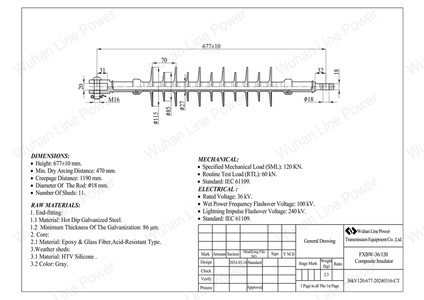
4. U-Shaped Clevis (Code: C)
Shape: U-shaped loop with drilled holes for pin or bolt.
Advantages: Easy installation and replacement.
Application: Connects insulators to cross-arms, yokes, or other fittings.
5. Y-Clevis (Code: Y)
Shape: Split into two arms forming a Y shape.
Advantages: Extra clearance or flexibility in certain designs.
Application: For special connection requirements.

6. Eye Type (Code: E)
Shape: Circular metal loop.
Advantages: Secure connection with shackles, links, or other circular hardware.
Application: Common in strain insulators.
Selecting the correct hardware structure ensures mechanical safety, long-term reliability, and efficient installation. Always confirm the structure type, mechanical load rating, and material compatibility for your project.
Related Articles:
Composite Suspension & Tension Insulator All Type
Composite Line & Station Post Insulator All Type
Composite Insulator Manufacturing: Key Processes and Technologies