


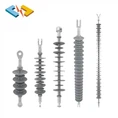

Insulator String Types and Fittings Used in Transmission Lines
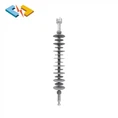
An insulator string refers to a flexible assembly composed of two or more insulator units, designed to suspend conductors while providing electrical insulation from transmission towers and the ground. These assemblies are essential components in overhead transmission lines, making sure both mechanical support and electrical reliability.
Depending on tower structure, insulator type, conductor size, range of sub-conductors per phase, and voltage level, insulator strings can be classified into different configurations. The two main kinds are:
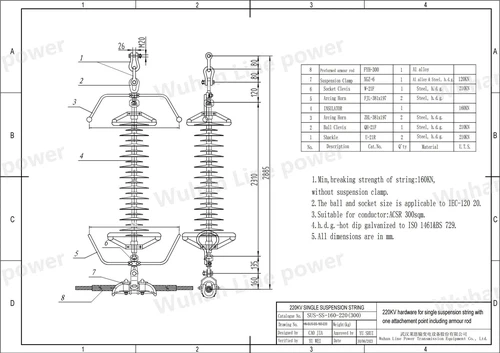
1. Suspension Insulator String
Suspension insulator strings are especially used on straight-line towers or tension towers for jumper spans. They bear the vertical load of the conductor but do not carry horizontal tension. These strings hang freely and rotate barely with conductor movement, providing flexibility in line routing.
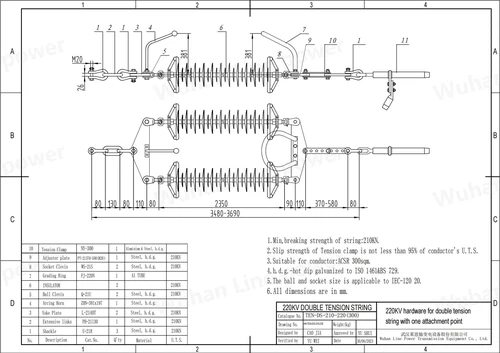
2. Tension Insulator String
Tension insulator strings are designed to bear full horizontal tension from the conductor. Unlike suspension types, they are subjected to full-size mechanical stress all through normal operation. Once the range of insulators in the string is determined, selecting the excellent conductor attachment method is critical.
Common hanging methods include single-point and double-point suspension. These provide freedom of movement in both horizontal and vertical directions, making them best for corner towers and areas with steep terrain.
Common Hardware Used in Insulator Strings
In transmission lines, various metal fittings-collectively called line hardware-are used to connect towers, stay wires, conductors, and insulators. Include:
Suspension Clamps
Used to grip the conductor or ground wire and connect to the suspension insulator string. A suspension clamp must:
- Withstand full vertical loads within the span
- Prevent conductor slippage under normal or fault conditions
Tension Clamps
Two types are used:

- Bolt-type Tension Clamp (e.g., ND / NDL series)
Fixed using bolts
Used for small-section conductors
Gripping strength ≥ 90% of the conductor's breaking strength - Compression-type Tension Clamp (e.g., NY-800/100)
Installed via hydraulic or explosive compression
"N" = tension, "Y" = hydraulic
First number shows aluminum section area, second shows metal core section
Connecting Fittings
Connecting fittings are divided into special-purpose and general-purpose types.
- Ball eye and socket clevis for ball-and-socket insulators
- Right-angle plates and links for channel-type insulators
These are custom-fit to specific insulator end designs and are not interchangeable.